


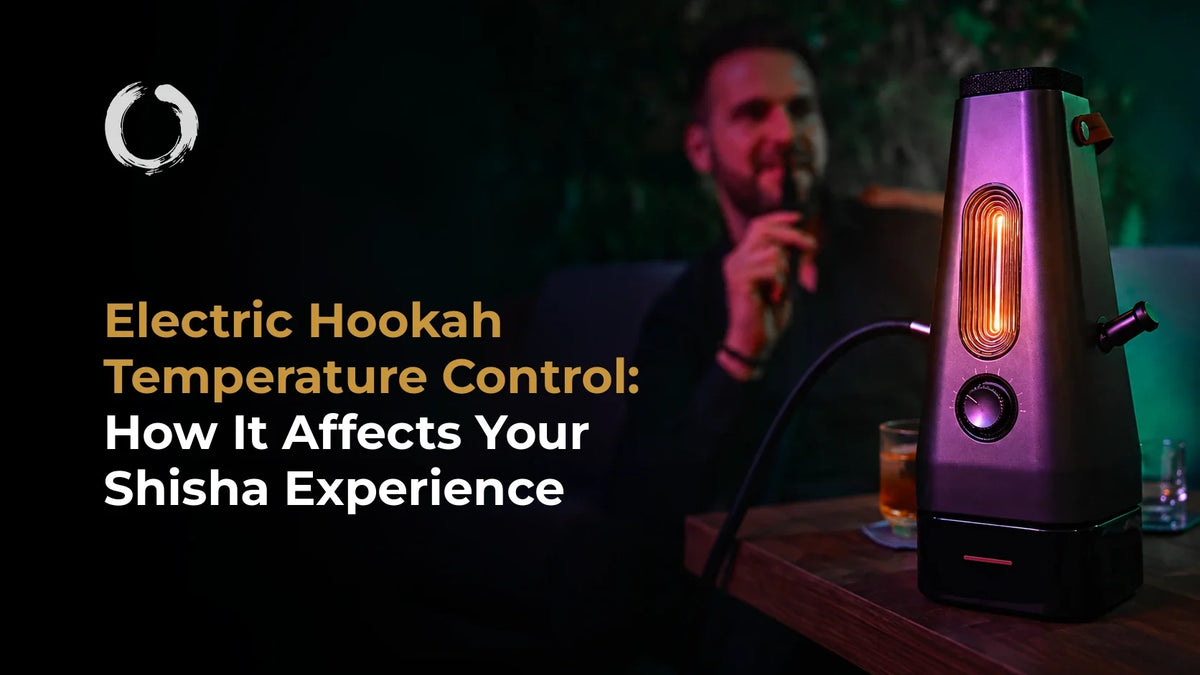
Temperature plays a central role in shaping every shisha session. From the first draw to the final moments, the way heat interacts with your shisha influences flavor intensity, vapor production, consistency, and the overall rhythm of the experience.
Traditional hookah setups rely on charcoal and manual heat adjustments. Electric hookah technology introduces a different approach, allowing users to manage heat through electronic systems designed for greater control and convenience.
Understanding electric hookah temperature control can help you make better decisions about your setup, prepare your shisha more effectively, and enjoy a more consistent session. For those who appreciate the traditional shisha ritual but prefer modern technology, ENSŌ brings electronic heating and contemporary design into the experience.
What Is Electric Hookah Temperature Control?
Electric hookah temperature control refers to the process of managing the heat delivered to shisha through an electronically powered heating system rather than relying entirely on burning charcoal.
In a traditional hookah, charcoal provides the heat necessary to warm the shisha. Users typically adjust heat by moving charcoal, changing the number of pieces, or modifying airflow around the bowl.
An electric heating system takes a different approach. It uses electrical energy to generate heat, with the level of control depending on the device's design and available settings.
The important distinction is that heating-element temperature and actual shisha temperature are not necessarily the same. Heat must transfer from the heating system into the bowl and through the shisha mixture.
Several factors influence that process, including:
-
The selected heating level
-
Bowl material and construction
-
Shisha packing density
-
Moisture distribution within the mixture
-
Airflow during each draw
-
Session duration
Understanding these variables helps explain why temperature management matters even when using an electronically heated device.
Why Temperature Matters in Your Shisha Experience
Heat does more than simply warm the shisha. It affects how flavor develops, how vapor is produced, and how consistently the session progresses.
1. Temperature Influences Flavor Development
Flavor is one of the most noticeable aspects of a shisha session, and heating conditions can change how that flavor is experienced. When shisha receives insufficient heat, the mixture may not reach the conditions needed to produce the expected flavor intensity. The result can feel muted or underdeveloped.
Excessive heat can create the opposite problem. The mixture may become overheated, resulting in harsh or unpleasant flavors that overpower its intended profile. A more balanced heating approach allows the mixture to warm progressively and supports a more controlled flavor experience.
For users exploring electronic shisha, this is one of the main reasons to pay attention to temperature settings rather than automatically choosing the highest available level.
2. Temperature Affects Vapor Production
Vapor production is another important part of the shisha experience. As heat reaches the shisha mixture, volatile ingredients and aerosol-forming components respond to the heating conditions. The resulting output depends on both the mixture and the device's operating characteristics.
Lower heat may produce lighter output, while increasing heat can change vapor density and intensity. However, more heat does not always mean a better session.
Once the mixture becomes overheated, additional heat can negatively affect flavor and overall consistency. The goal is to find a heating level that suits the particular shisha mixture and the experience you prefer.
3. Consistent Heating Supports a More Predictable Session
Traditional charcoal changes as it burns. Its size, surface condition, and heat output evolve throughout the session, requiring periodic attention.
Electronic heating offers a different way of managing this process.
A system designed to regulate its heating output can reduce some of the manual adjustments associated with charcoal. This makes it easier to approach each session with a repeatable starting point.
Consistency is not automatic, however. Bowl preparation, airflow, shisha quantity, and heating duration still matter. Temperature control works best when combined with a properly prepared setup.
Electric Heating vs. Traditional Charcoal Heat Management
Both approaches serve the same basic purpose: delivering heat to the shisha mixture. The difference lies in how that heat is generated and managed.
|
Feature |
Electric Hookah Heating |
Traditional Charcoal Heating |
|
Heat source |
Electrically powered heating element |
Burning charcoal |
|
Heat adjustment |
Device-dependent electronic controls |
Manual charcoal positioning |
|
Preparation |
Requires power and device setup |
Requires charcoal preparation |
|
Heat consistency |
Depends on heating regulation and design |
Changes as charcoal burns |
|
Session adjustments |
May involve changing electronic settings |
Involves managing charcoal |
|
Portability |
Depends on battery and device construction |
Depends on charcoal and lighting equipment |
Neither approach eliminates the importance of good bowl preparation. The appeal of electronic heating is its ability to integrate heat management into a more streamlined setup, reducing the need to handle charcoal throughout the session.
For people who value precision, simplicity, and modern design, that difference can be significant.
How Temperature Control Changes the Different Stages of a Session
A shisha session is not static. The mixture changes as heat is applied, moisture is gradually depleted, and the session progresses.
Understanding these stages helps you make more thoughtful heating decisions.
The Initial Heating Stage
At the beginning of a session, the shisha mixture and bowl are generally closer to room temperature. Heat must travel through the bowl and into the mixture before the session develops its expected flavor and vapor characteristics.
Starting with excessive heat may warm the outer portions of the mixture too aggressively before heat distributes throughout the bowl. A gradual approach can provide more control over this transition.The appropriate starting setting depends on the equipment, bowl, and shisha being used.
The Main Session Stage
Once the mixture reaches its intended operating conditions, the priority shifts from initial heating to maintaining a consistent experience. This is where temperature management becomes particularly useful.
Instead of repeatedly increasing heat, users can focus on how the shisha responds to the current setting. Flavor quality, vapor consistency, and changes in draw characteristics provide practical feedback.
A stable heating approach may require fewer adjustments than constantly switching between different levels.
The Final Stage
As the session continues, the mixture changes. Flavor intensity may decline, and the same heating setting may no longer produce the same result.
Increasing heat to compensate is not always the right solution. If the mixture is becoming dry or overheated, additional heat may make the experience less enjoyable.
Recognizing when a session has reached its natural endpoint is just as important as selecting the initial temperature.
How ENSŌ Brings Precision to Electric Hookah Temperature Control
The ENSŌ Shisha 2026 Edition combines adjustable electronic heating with a complete hookah system.
Its design preserves familiar elements of the shisha ritual, including a water chamber, hose, and reusable cup, while replacing charcoal with a ceramic heating system.
Adjustable Temperature From 180°C to 330°C
ENSŌ provides a selectable temperature range of 180°C to 330°C (356°F to 626°F), adjustable in 5°C increments. This allows users to make relatively small changes instead of relying on broad heating levels. The electronic dial also makes it possible to return to a previously preferred setting when preparing the same shisha blend.
For enthusiasts who enjoy experimenting with different mixtures, this degree of adjustment offers a practical way to explore how heat affects the experience.
Electronic Preheating and Heat Regulation
The ENSŌ 2026 Edition uses a five-minute preheating program before regulating the selected heating temperature. This creates a defined preparation sequence. Rather than manually repositioning charcoal throughout the session, users can adjust the electronic setting when necessary. The heating system is designed to maintain its target temperature, although the actual conditions inside the shisha mixture can still vary with preparation and airflow.
An Open System for Different Shisha Blends
ENSŌ is designed as an open system, allowing users to prepare their preferred compatible shisha mixtures without relying on proprietary pods. Its reusable porcelain cup supports the familiar process of packing shisha before a session.
Because blends differ in texture, moisture, and density, adjustable temperature settings provide flexibility when moving between different preparations. The result is a modern approach to the ritual without abandoning its recognizable elements.
ENSŌ Diamond: Temperature Control for Your Existing Hookah
Not everyone wants to replace an existing hookah. For enthusiasts who already own a setup they enjoy, ENSŌ Diamond offers a different approach.
ENSŌ Diamond is an electronic heating system designed to work with an existing compatible hookah, replacing charcoal-based heating with adjustable electronic control. Its temperature range extends from 180°C to 320°C, with adjustable preheating duration.
Diamond also offers two heating approaches:
-
Phoenix: Manages temperature dynamically throughout the session.
-
Oracle: Maintains the selected heating temperature.
These options provide flexibility for users who want to explore different heating behaviors while keeping their existing hookah arrangement.
The distinction between ENSŌ Diamond and the complete ENSŌ Shisha system is straightforward: one modernizes the heating method of an existing hookah, while the other provides an integrated electronic hookah experience.
How to Find the Right Temperature for Your Shisha
There is no single temperature that works equally well for every blend, bowl preparation, and personal preference. The most useful approach is to establish a starting point and make deliberate adjustments.
Step 1: Prepare the Shisha Evenly
Distribute the shisha in the cup according to the device's instructions. Avoid excessive compression or overfilling, as these can restrict airflow and influence how heat moves through the mixture.
Step 2: Select an Appropriate Starting Temperature
Choose a setting suitable for your shisha preparation. ENSŌ's published guidance suggests starting around 200°C to 220°C for lighter blends, with higher settings potentially suitable for denser preparations. These are starting references rather than universal requirements.
Step 3: Complete the Preheating Process
Allow the device to finish its programmed preheating stage before evaluating the session. This helps establish more consistent initial conditions.
Step 4: Make Small Adjustments
If the flavor or vapor output is not developing as expected, adjust the setting gradually. With ENSŌ's 5°C increments, users can explore changes without making large temperature jumps. Give the mixture time to respond before adjusting again.
Step 5: Remember Your Preferred Settings
When you find a combination that works, record the blend, approximate packing quantity, temperature, and session characteristics. Repeating these conditions can help you achieve a more familiar experience next time.
For additional setup instructions, the ENSŌ Experience guides provide product-specific information on preparation, temperature adjustment, and maintenance.
Common Temperature Control Mistakes to Avoid
Even with electronic heating, a few habits can make sessions less predictable.
Starting at the maximum temperature: Higher settings are not automatically better. Begin with a suitable level for the blend and adjust according to its response.
Changing settings too frequently: Heat takes time to move through the cup and shisha mixture. Repeated adjustments can make it difficult to understand which setting is actually working.
Ignoring packing density: A tightly compressed mixture may behave differently from a loosely prepared one, even at the same temperature.
Overlooking cleaning: Residue inside the cup can affect subsequent sessions. Clean removable components according to the manufacturer's instructions after they have cooled.
Expecting identical results from every blend: Different shisha mixtures respond differently to heat. Temperature settings should reflect those differences.
Avoiding these mistakes helps make electronic heating more useful rather than treating it as a replacement for proper preparation.
Frequently Asked Questions About Electric Hookah Temperature Control
What Is the Ideal Temperature for an Electric Hookah?
There is no universal ideal temperature. It depends on the shisha mixture, bowl preparation, heating system, and desired experience. ENSŌ offers adjustable settings so users can identify temperatures suited to their preferences.
Does Higher Temperature Produce More Vapor?
Increasing heat can influence vapor production, but excessively high temperatures may negatively affect flavor. A balanced setting is generally more useful than simply choosing the maximum available temperature.
Can I Change the Temperature During a Session?
Yes. The ENSŌ Shisha 2026 Edition allows users to adjust temperature during operation through its electronic dial. This makes it possible to respond to changes in flavor or vapor characteristics without repositioning charcoal.
Is Temperature Control Useful for Different Shisha Flavors?
Yes. Different blends can vary in moisture, density, and composition. Adjustable heating provides flexibility when preparing different flavors and mixtures.
What Is the Difference Between ENSŌ Shisha and ENSŌ Diamond?
ENSŌ Shisha is a complete electric hookah with an integrated heating system, water chamber, and hose. ENSŌ Diamond is an electronic heating solution designed for compatible existing hookahs. Both emphasize adjustable heating and control.
Conclusion: Better Temperature Control, a More Personalized Ritual
Electric hookah temperature control changes how users approach shisha preparation. Instead of depending entirely on charcoal positioning and manual heat management, electronic heating provides a more direct way to select and regulate temperature.
The benefits become most apparent when temperature control is combined with thoughtful packing, suitable airflow, and an understanding of how different shisha blends respond to heat.
With its adjustable heating system, integrated design, and familiar shisha components, ENSŌ offers a way to explore this approach while preserving the character of the traditional ritual.
Whether you're interested in a complete electronic hookah or an electronic heating solution for your existing setup, explore ENSŌ's electric hookah collection to discover the option that fits your preferred experience.
