


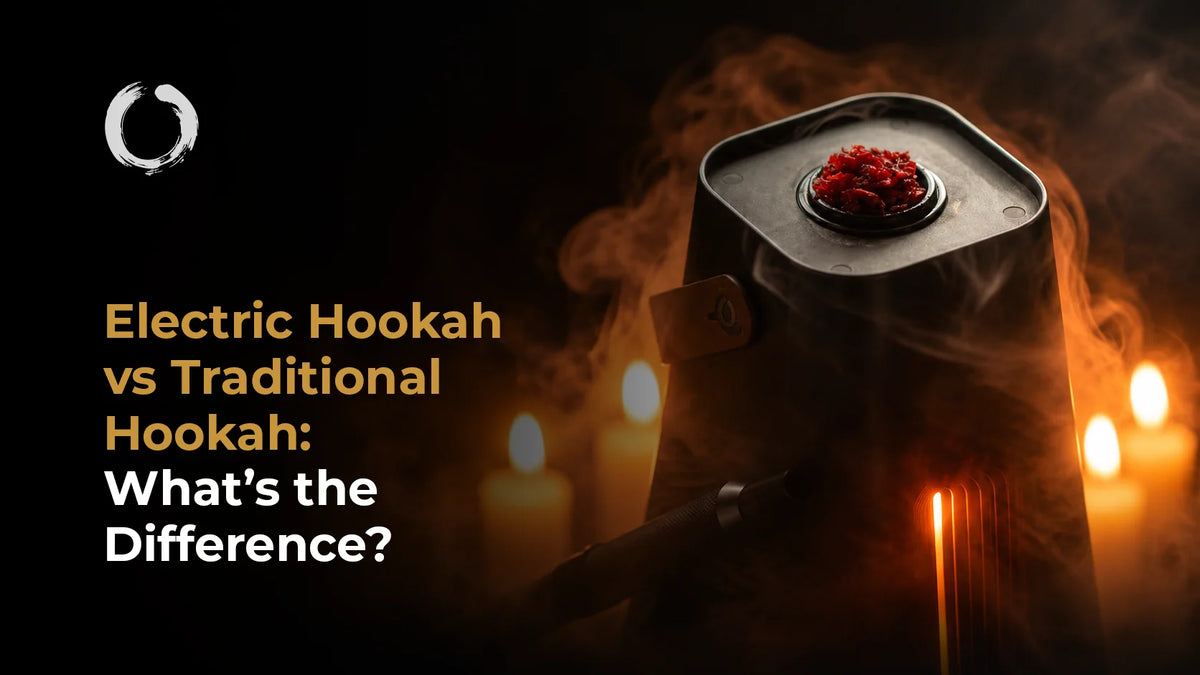
If you have enjoyed shisha the traditional way for years, an electric hookah can raise a fair question: is it the same experience with a battery, or something different altogether?
The honest answer is a bit of both. The water, the hose and your favourite blend stay the same. What changes is the heat source, and that change ripples through setup, control, cleaning, cost and where you can enjoy a session. This guide compares the two side by side so you can decide which one fits the way you actually smoke shisha.
The Short Answer
A traditional hookah heats the blend with burning charcoal placed on top of the bowl. An electric hookah heats the blend with an electronic element set to a chosen temperature. Everything else about the two flows from that single difference.
Side-by-Side Comparison
|
Factor |
Traditional hookah |
Electric hookah |
|
Heat source |
Burning charcoal |
Electronic heating element |
|
Temperature control |
Moving, adding or removing coals |
Dial or settings, often in small steps |
|
Preparation |
Pack bowl, prepare foil or heat manager, light coals |
Pack cup, set temperature, preheat |
|
Mid-session attention |
Regular coal management |
Occasional fine-tuning |
|
Power |
None needed |
Rechargeable battery or mains |
|
Ongoing consumables |
Charcoal, foil, lighters or burners |
Electricity, replacement cups as needed |
|
Cleanup |
Ash, spent coals, bowl, base |
Chamber, shaft, valve and base |
|
Portability |
Needs coals and a way to light them |
Needs a charged battery |
|
Ritual style |
Hands-on, technique-based |
Settings-based, repeatable |
1. Heat Source and Control
On a traditional hookah, the coals are the engine. Their size, how fully they are lit, where they sit and how long they have been burning all affect the heat reaching the blend. Experienced smokers learn to read the session and respond: shifting a coal to the edge, removing one or adding a fresh piece.
An electric hookah replaces that judgement with a setting. On the ENSŌ 2026 Edition, a stepless dial sets the temperature anywhere from 180 to 330 °C in 5° steps, and the device holds it.
Once you find a setting you like for a blend, you can return to it next time instead of rebuilding the same coal arrangement from memory. Neither approach is wrong. One rewards skill and attention. The other rewards consistency.
2. Setup Time and Effort
A traditional session usually involves several separate tasks: preparing the bowl, setting up foil or a heat management device, lighting coals on a burner or stove, waiting for them to be fully lit and then placing them carefully.
An electric hookah folds most of that into one step. You fill the base, pack the cup lightly, put it in the heating chamber and start the preheat. ENSŌ's guide recommends a preheat of five to eight minutes at the starting temperature. You can use that time to set the table or choose a playlist rather than watching a burner.
3. The Session Itself
With charcoal, heat tends to change over the course of a session. Fresh coals start strong, settle, then fade as they shrink and ash builds up. Keeping things smooth means checking in regularly.
With electronic heating, the device aims to hold a steady temperature for the whole session. If you want more vapour, you raise the setting by 15 to 30° and give it a moment. If you want a gentler draw, you lower it. The adjustments are smaller and more predictable.
Session length also works differently. A traditional bowl lasts as long as the blend and coals do. An electric hookah session is shaped by the battery. ENSŌ's 5000 mAh removable battery runs for around 90 to 120 minutes depending on temperature, and swapping in a charged spare keeps the evening going.
4. Running Costs Over Time
The cost comparison is less about the purchase price and more about what you keep buying.
-
Traditional: charcoal is a recurring purchase, along with foil or replacement heat management parts, and something to light the coals with.
-
Electric: the main recurring cost is electricity. Over time you may add a spare battery, extra cups or a new hose, but there is no fuel to restock before each session.
For regular smokers, the absence of a weekly charcoal run is often one of the first things they notice.
5. Cleaning and Maintenance
A traditional setup leaves ash, spent coals and residue on foil or in the heat manager. These need to cool fully before you can dispose of them, and the bowl and base still need washing.
An electric hookah removes ash and coals from the routine entirely.
Cleaning shifts to the device itself: a scrub of the heating chamber, a brush through the vapour shaft and air path tubes and a rinse of the blow-out valve every one or two sessions. ENSŌ includes a 3-in-1 multi-tool, a cleaning glove and brushes with the 2026 Edition, and disposable cups are available for nights when you want the quickest possible tidy-up.
6. Portability and Where You Can Use It
A traditional hookah needs a safe place to light and handle burning coals, plus a way to dispose of them afterwards. That limits it to places where open heat is practical.A cordless electric hookah only needs a charged battery. That makes it simpler to move from the living room to a balcony, garden or terrace.
ENSŌ's vegan leather carry strap and the dedicated ENSŌ Backpack are designed with this kind of mobility in mind. As always, check the rules of any venue or space before a session.
7. Flavour and Blend Choice
Many smokers worry that going electric means giving up their favourite blends. That depends on whether the device is open or closed.
Closed electric systems use pods or capsules from a single manufacturer. Open systems let you pack whatever you like. ENSŌ is an open system: it accepts any standard shisha blend, including dark leaf, blonde leaf and nicotine-free herbal molasses, with a cup capacity of 15 to 25 g.
Because heat is applied evenly from a set temperature, flavour can stay more consistent from the first draw to the last. The blend and the way it is packed still matter, so mixing in the juices and packing lightly remain good habits.
8. The Ritual
This is the most personal difference, and it is worth being honest about.
For some people, lighting coals and managing the bowl is the ritual. The hands-on work is part of the pleasure, and nothing about that is outdated.
For others, the ritual is the conversation, the flavour and the time spent together, and coal management is simply the work that comes before it. An electric hookah keeps those elements and removes the work. ENSŌ's name comes from the ensō, the Zen circle drawn in a single brushstroke, and the design philosophy reflects that idea: keep what is essential, remove what is not.
Which One Is Right for You?
A traditional hookah may suit you if you:
-
Enjoy managing charcoal and reading the bowl.
-
Prefer a completely non-electronic setup.
-
Already have a routine that gives you the results you want.
An electric hookah may suit you if you:
-
Want to skip lighting, moving and disposing of coals.
-
Like the idea of saving a temperature and repeating a great session.
-
Want a cordless setup you can move around the home.
-
Value a quick, ash-free cleanup.
A Middle Path: Keep Your Hookah, Change the Heat
There is a third option that many traditional smokers overlook. If you love your current hookah but not the coals, the ENSŌ Diamond sits on top of a traditional hookah in place of the bowl and charcoal. It uses a ceramic heating element and a built-in ceramic cup that holds 10 to 15 g, with adjustable temperature and preheat, around 90 to 120 minutes per battery and USB-C charging. The ENSŌ guide to ENSŌ Diamond vs traditional heat management devices covers that comparison in more depth.
Frequently Asked Questions
Does an electric hookah taste different from a traditional one?
The blend tastes like itself, without any charcoal in the setup. Many people notice that flavour stays steadier through the session because the heat does not rise and fall with the coals.
Do I need special tobacco for an electric hookah?
Not with an open system. ENSŌ takes standard shisha blends, packed lightly into its porcelain cup.
Is an electric hookah harder to learn?
Usually it is easier. Start at the lowest temperature, preheat, then adjust in small steps until the draw feels right.
The Bottom Line
Traditional and electric hookahs share the same heart: water, a hose and a blend you enjoy. The traditional hookah gives you hands-on control through charcoal. The electric hookah gives you steady, repeatable heat with less preparation and no ash.
If the electric approach sounds like your kind of evening, explore the electric hookah range from ENSŌ, or start with the ENSŌ Legacy Edition, the same award-winning body with the original battery.
